Breaking rules with Courtney Collins
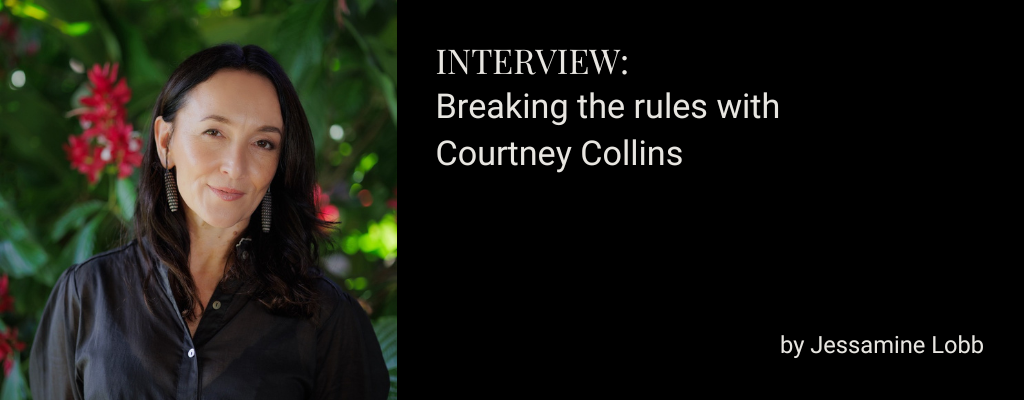
Interview by Jessamine Lobb
Award-winning author Courtney Collins is a self-professed craft nerd. After years adhering to the ‘official’ style of storytelling, she’s learning to follow her own instincts.
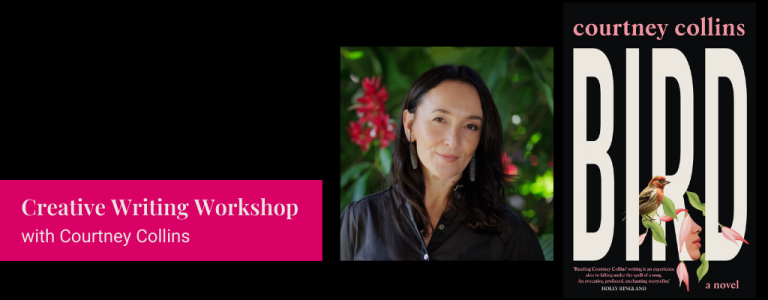
Courtney Collins recently spoke to Jessamine Lobb about her upcoming workshop Creative Writing Workshop with Hunter Writers Centre on October 12, where attendees will learn to shape stories that feel inspiring and authentic to them.
What makes your upcoming workshop with Hunter Writers Centre unconventional?
In many writing workshops (and books about writing), you often encounter so-called ‘rules’ of storytelling, delivered as if they are universal truths: ‘Show, Don’t Tell’, ‘Write What You Know’, ‘Find the Universal in the Particular’. This workshop takes a different approach—challenging these rules and instead offering ‘tools’ that writers can either take up or leave on the bench, ready to pick up when they’re needed.
I’m interested in the writers in the room identifying their specific intention – because that is where the energy for the work will come from, not in abiding by rules that risk flattening their voice and the shape of their storytelling.
Where did your alternative approaches to storytelling come from?
I’ve been writing, teaching, and thinking about creative writing for decades. In my early years, I was a model student—eager to absorb every writing rule and apply them. Over time, though, I found these rules to be stifling. I have the draft of an entire novel that ended up lifeless, crushed under the weight of these constraints.
A few years ago, I realised I wanted to tell a story that focused on connection—a narrative that emphasised the intricate links between human experiences, societies, and the natural world. That idea grew into BIRD (Hachette, 2024), a novel where characters are interconnected across cultures, time, and space, their actions intertwined in an expansive, interconnected web.
What inspired you to explore whiteness in literary production, and how do you relate to discomfort?
I spent eight years living in southeast Arnhem Land, running a storytelling project with local First Nations artists and teaching at the Batchelor Institute of Indigenous Education. Living in an Indigenous community, I began to be aware of my own whiteness, something I had never fully examined.
Many things I had always taken as fundamental truths needed to be questioned—one of those being the idea of isolated individualism, and the notion that we are born alone and die alone. But in Ngukurr, where I lived, my friends, colleagues, and neighbours believe that we are born connected and die connected, and that we are part of a vast, interwoven web.
The process of pulling on these threads, unravelling what I had taken for granted as truth, was deeply uncomfortable—but ultimately, it was liberating.
How did writing BIRD feel different from your debut novel, The Burial?
Writing fiction is a transformative process—for both the characters and the author. Neither remains static. Characters evolve as the narrative progresses, and the author evolves with them. Hopefully, each revision unearths new insights, and brings to light connections that were previously unconscious. As Toni Morrison said, ‘Narrative is radical, creating us at the very moment it is being created.’
So, the person who sat down to write The Burial isn’t the same person who wrote BIRD. Over time, I’ve learned to be clear about my intentions and follow them through. I’ve also grown in my respect for mystery, and for the connections between humans and the natural world. I think that’s where the magic lies—and that’s how I want to grow as a writer.
If The Burial and BIRD met at a party, how would they interact?
They’d probably be hanging out near the cheese platter—that’s where I’d be, too. And as they both reach for the crackers, one of them would whisper, ‘I wonder if she’ll ever write a novel that doesn’t start with B?’
Join Courtney for her Creative Workshop on Saturday October 12. Visit: WORKSHOP: Creative Writing Workshop with Courtney Collins for more information.