
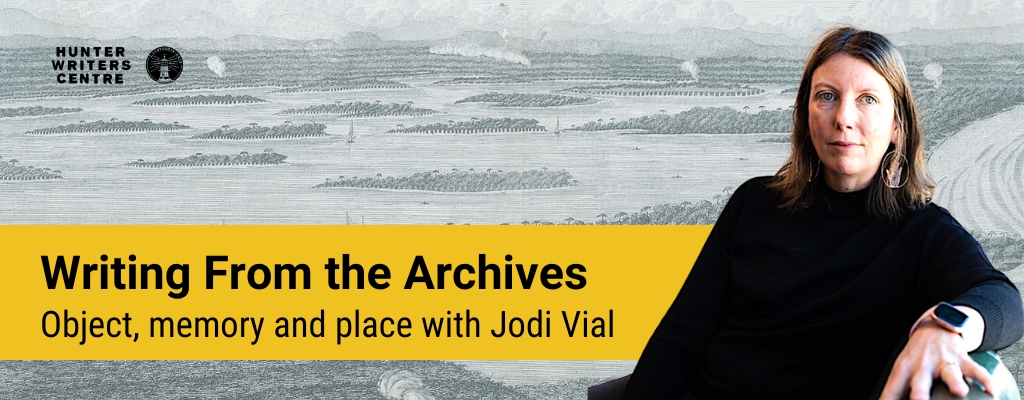
What happens when we widen the frame of what we consider archives? Might it include the body, memory, landscape—even feeling?
Facilitated by poet, writer and researcher Dr Jodi Vial
Key Information
Early-bird discount 15% if you book by 26 July 2025 with coupon code: EARLY15.
About: In this workshop with writer and researcher Dr Jodi Vial, you’ll explore how archives might live not only in institutions, but in personal objects, memory, place, and the body itself. Through creative writing, reflection, and a gentle river walk, discover new ways to record and reclaim the stories that matter.
When: Saturday 6 September
10 am – 1 pm
Venue: Maitland City Library, 480 High Street, Maitland NSW 2320
Cost:
Full: $90
Member: $60
Member – Concession/Youth: $45
Non-member Concession/Youth: $60
* Hunter Writers Centre defines youth as someone aged 25 years or under.
Registrations close 4 pm, Friday 5 September
Workshop Overview
Archives are usually thought of as collections of official records—documents held in institutions that influence how history is remembered. But these archives only tell part of the story, often from the perspective of the dominant culture. What happens if we widen the frame? Can archives include the body, memory, landscape—even emotion?
In this thoughtful, place-based workshop, writer and researcher Dr Jodi Vial invites participants to explore the archive in broader, more personal terms. Drawing on her creative research project All The Water a Body Can Hold, Jodi guides you through writing exercises that ask you to reflect, observe, and interpret.
You’ll begin by looking at objects from Maitland Library’s Heritage Collection, engaging with these objects through writing activities to think about how objects are viewed as part of a larger collection, and the way that stories, told and untold, are tied to collections.
Next, you’ll describe a small personal object as though it belonged in a formal archive or collection—learning how official records are built through selection and classification. Then, you’ll revisit the object through your own memory, emotion, and knowledge—uncovering the layers that institutional records can’t hold.
A walk to the nearby Coquun/Hunter River offers a chance to reflect on how place carries memory and meaning, and how land and water might also be understood as living archives. Back at the library, you’ll develop your writing in response to what you’ve observed, remembered, and felt.
The workshop closes with reflection and conversation: What kinds of stories deserve to be recorded, and what kinds of archives might we need to hold them?
This workshop is for writers, artists, and anyone curious about how we carry, shape, and reclaim story.
Accessibility
Maitland Library has a disability parking space.
Entry to the venue is via ramp, with a steep gradient. There is an accessible bathroom and variable height desks available.
Please let us know if you have specific access requirement when you are booking your workshop. Please email Bastian at programs@hunterwriterscentre.org or call Katherine on 0435 858 145 to discuss specific access requirements. We are here to help.
Getting There
Public Transport:
For real-time schedules and the most convenient routes from your location, use the Transport for NSW Trip Planner. This tool provides up-to-date information on bus timings and routes
By Car:
Parking is available at the library and on the street.
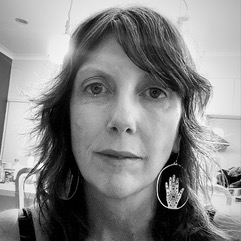
About Jodi Vial
Jodi Vial writes across the forms of poetry, short fiction and creative non-fiction, with a focus on the intersection of literature, landscape and history. She has a PhD in Creative Writing from the University of Newcastle. In a previous life, she was a newspaper journalist. Her microfiction and poetry has been published by Spineless Wonders, Recent Work Press and Papatuanuku Press. Her short story cycle, Lives of Girls and Women, won the Penny Finnegan Art Prize in 2018 and resides in the University of Newcastle’s permanent art collection. She was a Visiting Scholar at the State Library of NSW in 2023, and a finalist in the Joanne Burns Microfiction Prize in 2016, 2017 and 2024. Jodi lives and writes on the unceded lands of the Awabakal and Worimi people.